
Interactive workshops provide an overview of the human centered design process and give participants hands-on opportunities to practice the tools and methods of human centered design.
Workshops can catalyze an openness to HCD methodologies among a team that’s unfamiliar with them, but their short timeframe has its limits. For organizations looking to prepare their staff and community members’ to be able to facilitate the human centered design process for themselves, Milo recommends beginning by facilitating a human centered design process from start to finish. Milo can work with your team side-by-side, employing a “learning by doing” approach to effectively train new teams in the full human-centered design process.
1-hour workshop
A short workshop can give participants an overview of the human centered design process, with an emphasis on the particular approaches of equity-based human centered design. Participants are able to practice a handful of human centered design tools (eg. journey mapping) through hands-on activities related to a hypothetical design challenge.
Check out a recording of a 1-hour workshop that Milo was invited to give at the 2020 Woodhull Sexual Freedom Summit conference, titled “Imagining a Future Designed by Sexworkers.”
2.5-day workshop
Through their in-depth human centered design immersive workshops, Milo supports participants to use the human centered design process to address a major challenge related to their work and/or communities. Milo guides participants through the entire human centered design process so that by the end of two and a half days, participants not only better understand human centered design but also have a low fidelity prototype ready to integrate into their work.
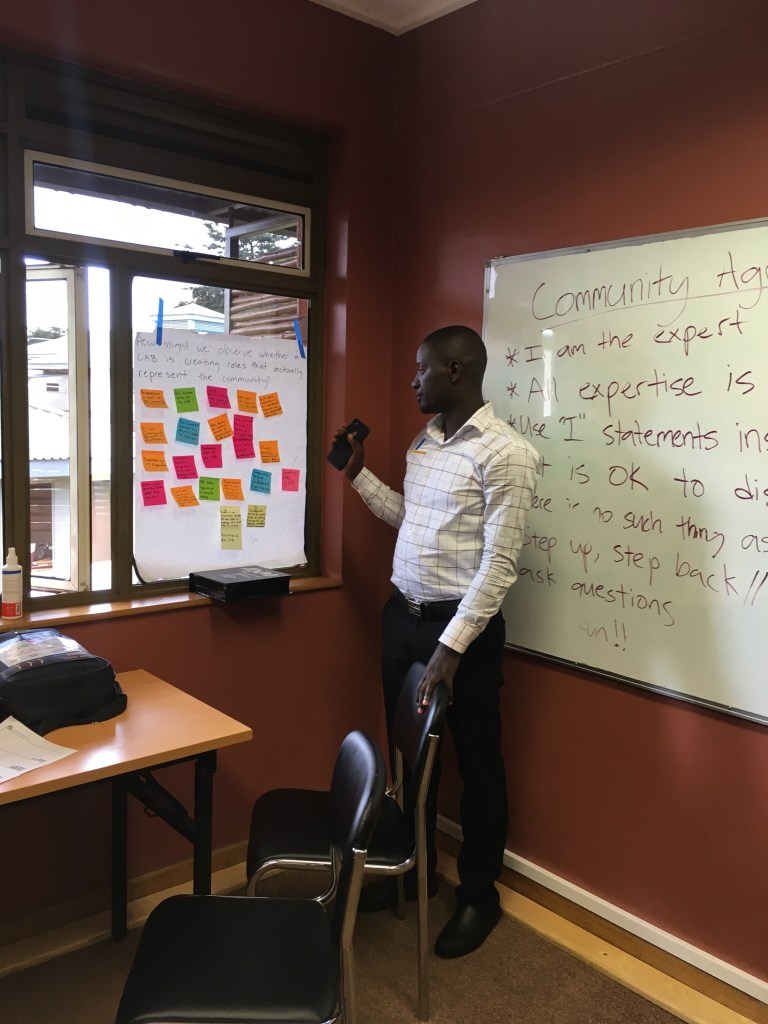
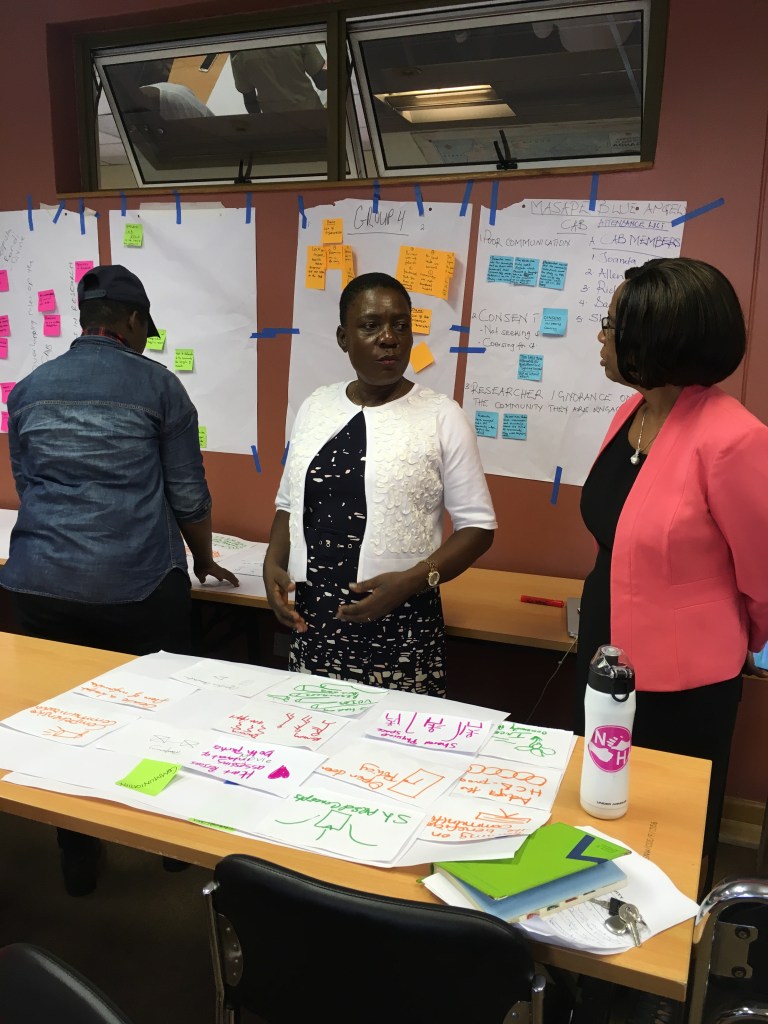
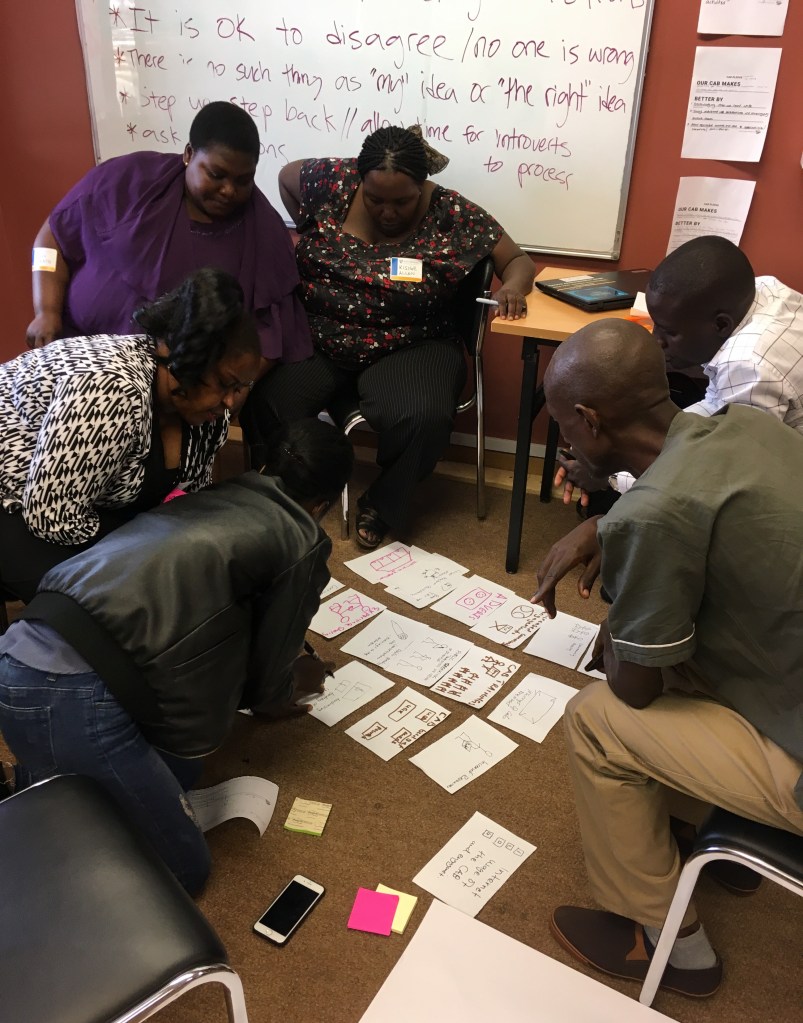
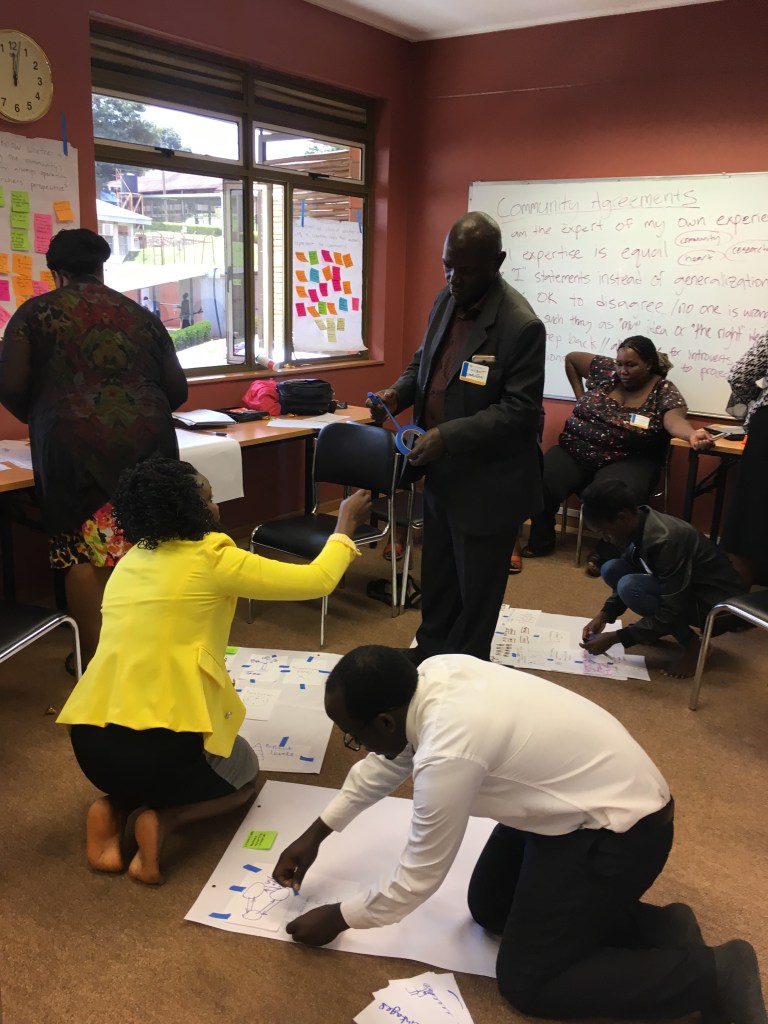
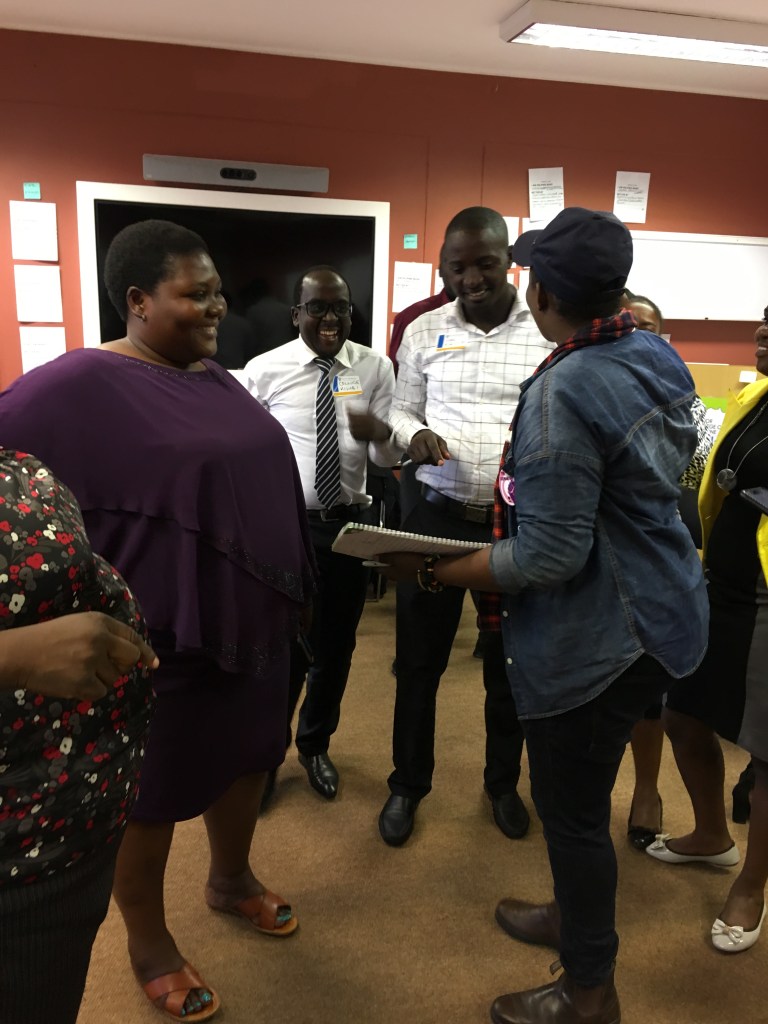
Linked below is a case study of a 2.5-day participatory workshop that Milo led in Uganda. In this workshop, members of a Community Advisory Board designed prototypes for community-led public health research. Though most participants had never heard of human centered design when they entered the workshop, within less than 3 days, they were engaged in spontaneous, animated debates over the pros and cons of different prototyping methods, excitedly planning how to incorporate human-centered design into their work, and presenting their prototypes back to their communities:
 Curb Cut Design Studio