
What is human centered design?
Human centered design, also called HCD, is a methodology that breaks down the messy process of creating something into a series of manageable steps. The HCD process can be used to create just about anything, from a phone app to a complex organizational system. The key ingredient of HCD is ensuring that whoever is going to be most impacted by whatever is being created is involved in the process of creating it.
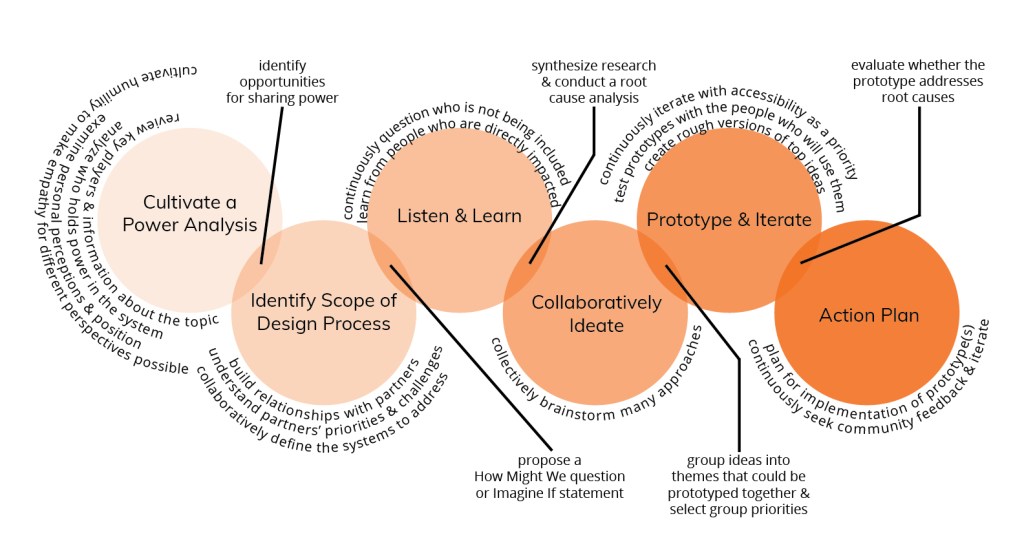
There isn’t a standardized vocabulary that HCD practitioners use to refer to their process, but the steps generally follow a path that begins with identifying the problem and ends with implementing solutions. The steps in the HCD process can be repeated again and again for iterative improvements and adaptations.
What is the Curb Cut approach to HCD?
Through Curb Cut Design Studio, Milo practices HCD with an equity lens, meaning that they use the human centered design process to more equitably redistribute concentrated power.
Milo is an active member of the Design Justice Network and a signatory of the co-created design justice principles, which summarize many of the core values of design justice.
Milo developed their equity-based and trauma-informed design practice with guidance from many teachers, including those at the Maryland Institute College of Art Center for Social Design in Baltimore; Antionette Carroll, founder of the Creative Reaction Lab in St. Louis and creator of the Equity-Centered Community Design framework; Rachael Dietkus, a leader in trauma-informed design; George Aye of the Greater Good Studio in Chicago, Tania Anaissie of Beytna Design; Jessica Mason of The Social Impact Studio; Bobbie Hill of Concordia in New Orleans; the Design Justice Network; and IDEO.org.
Milo also draws from their experience in community activism and organizing. Their time as part of the HIPS community, a harm reduction organization in Washington, DC, and the Community Empowerment Fund community, a community-based organization in North Carolina, especially influenced their design practice. The foundation of their political education comes from Ella Baker, Grace Lee Boggs, adrienne maree brown, Leah Lakshmi Piepzna-Samarasinha, bell hooks, Mariame Kaba, and the Racial Equity Institute.
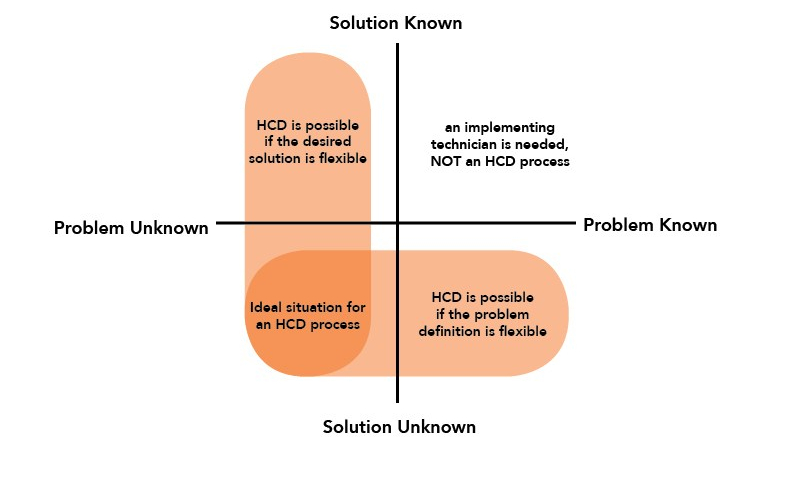
When is HCD the right tool for the job?
 Curb Cut Design Studio